Mar 19th, 2026



"This blog is part of Sterling Trading Tech’s series examining FINRA’s proposed intraday margin amendments to Rule 4210"
Introduction
A central theme of FINRA’s proposed amendments to Rule 4210 is that margin risk does not develop solely at the end of the trading day. Instead, exposure can form and change materially intraday, particularly during periods of heightened volatility. FINRA’s filing emphasizes that margin frameworks relying primarily on end-of-day calculations may not fully reflect how risk emerges in modern markets.1
In its comment letter, Sterling Trading Tech similarly notes that intraday exposure monitoring better aligns margin requirements with real-time trading dynamics. (Read the full comment letter here)
Intraday Development of Margin Risk
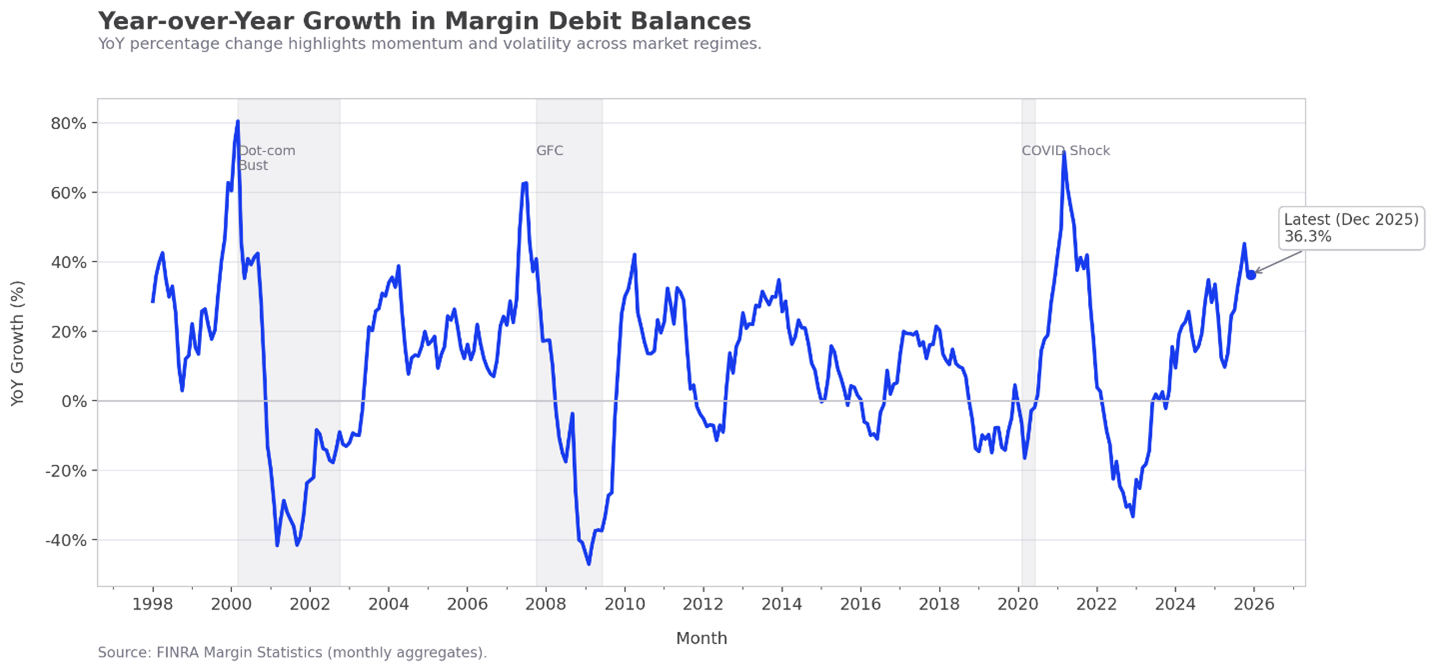 Figure 1. Year-over-year changes in margin debit balances illustrate variability in margin usage across market conditions.
FINRA explains that trading activity and margin exposure can change materially during the trading day, particularly during periods of heightened volatility.1 The filing notes that margin risk may develop before end-of-day margin calculations or margin calls are applied, and that reliance solely on end-of-day processes may not fully reflect how exposure evolves intraday.
This point can be further illustrated by examining the year-over-year growth in margin debit balances. As shown in the accompanying chart, margin debit growth has not followed a smooth or linear path over time. Instead, it has exhibited periods of acceleration and contraction across different market regimes, including major market stress events.
While this interpretation is drawn from FINRA’s published margin statistics rather than a specific conclusion stated in the filing, it helps demonstrate why exposure can emerge quickly during periods of stress—even if end-of-day balances ultimately appear manageable. Taken together, this reinforces FINRA’s view that margin standards should account for when exposure arises during the trading day, not solely the final end-of-day position.2
Margin Exposure During Periods of Market Stress
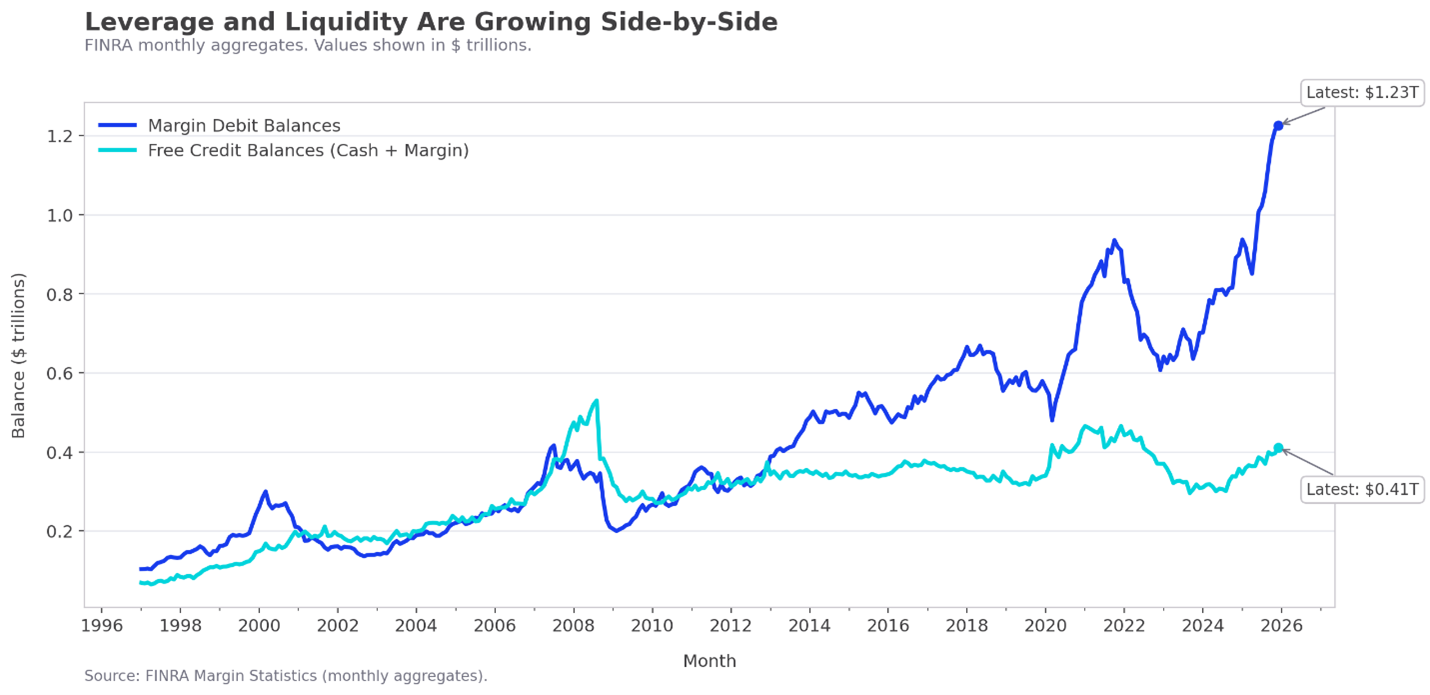 Figure 2. Historical periods of market stress correspond with changes in aggregate margin debit balances.
FINRA discusses historical stress periods to illustrate how margin exposure and associated risk can change rapidly as market conditions evolve.1 During periods of heightened volatility, significant changes in customer positions, pricing, and leverage can occur within a single trading session rather than developing gradually over multiple days.
In this context, FINRA observes that margin exposure may increase materially during the trading day before firms are able to apply end-of-day margin calculations or issue margin calls. Traditional margin processes that rely primarily on end-of-day assessments may therefore lag fast-moving risk during stress events.
This timing dynamic is central to FINRA’s rationale for proposing intraday margin standards. By focusing on when exposure arises—rather than only on its end-of-day measurement—the proposed amendments are intended to enable earlier identification and management of risk.2
Variability Across Time Periods
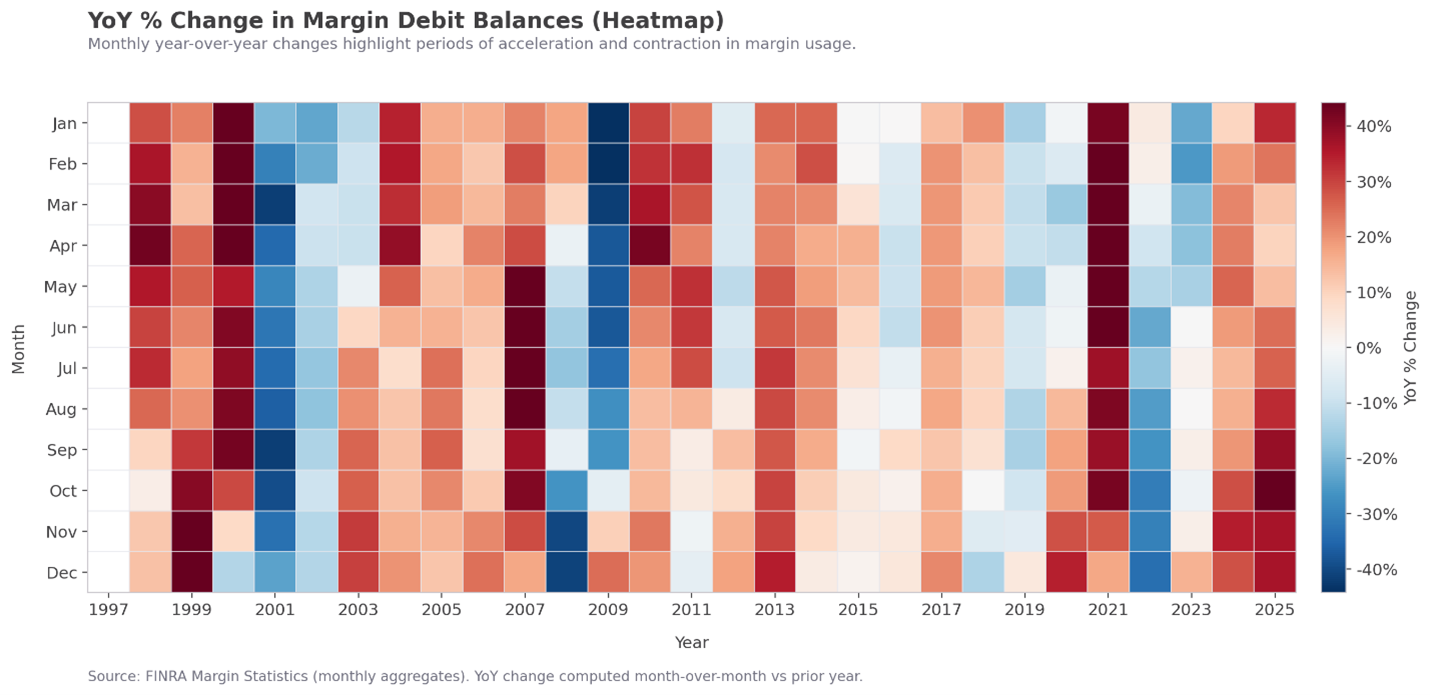 Figure 3. Margin debit balances vary across months and years, reflecting changing market conditions.
FINRA explains that margin conditions vary meaningfully over time as market activity, volatility, and trading behavior change.1 The filing emphasizes that margin exposure is not static and can shift materially during the trading day, supporting the need for standards that respond dynamically to evolving exposure.2
This variability can be further illustrated through a year-over-year heat map of margin debit changes. While derived from FINRA’s published statistics, this lens shows that leverage often builds gradually over extended periods, while drawdowns can occur over much shorter timeframes.
Viewed together, these patterns highlight a timing mismatch in how margin risk accumulates versus how it can materialize. Sterling Trading Tech’s comment letter echoes this point, noting that intraday standards are better suited to address fast-developing exposure during volatile market conditions.
Next: how FINRA’s data reframes the role of trader classification in assessing margin risk
Footnotes
We look forward to learning more about your trading needs.

Sterling Risk & Margin Wins Best Margining Solution at Risk Asia Awards 2026
Award recognizes Sterling’s real-time margin management for brokerages and trading firms ...

When 611 Is Gone, Best Execution Is the Safeguard
Blog Series: The 611 Question | Part ...

Sterling's Position: Support, With Five Conditions
Blog Series: The 611 Question | Part ...

Sterling Trading Tech and Atlas Digital Markets Turn Order Data into Best Execution Evidence
Clients measure execution on their own complete order data inside the Sterling OMS 360 and ...
