Mar 12th, 2026



"This blog is part of Sterling Trading Tech’s series examining FINRA’s proposed intraday margin amendments to Rule 4210"
Introduction
On January 14, 2026, FINRA published in the Federal Register a proposed amendment to Rule 4210 (Margin Requirements) that reflects how margin risk develops in today’s markets. The proposal would replace the existing Pattern Day Trading (PDT) margin framework with intraday margin standards, shifting the regulatory focus from trader classification and end-of-day calculations toward exposure as it forms during the trading day.1
The proposal reflects FINRA’s view that margin risk today is shaped by market scale, participation, and leverage, and that exposure can develop intraday rather than accumulating gradually toward the close.
FINRA explains that these proposed amendments are intended to improve transparency, consistency, and regulatory clarity by replacing trader-classification-based requirements with exposure-based standards applied more uniformly across accounts.3 Following publication of the proposal, Sterling Trading Tech submitted a comment letter in support of the amendments, highlighting how intraday, exposure-based margin standards better reflect modern trading behavior under Rule 4210.
Together, the filing and accompanying data provide a useful lens into how margin usage, leverage, and risk dynamics have evolved and why FINRA believes a modernized framework is warranted.
Margin Balances and Market Scale
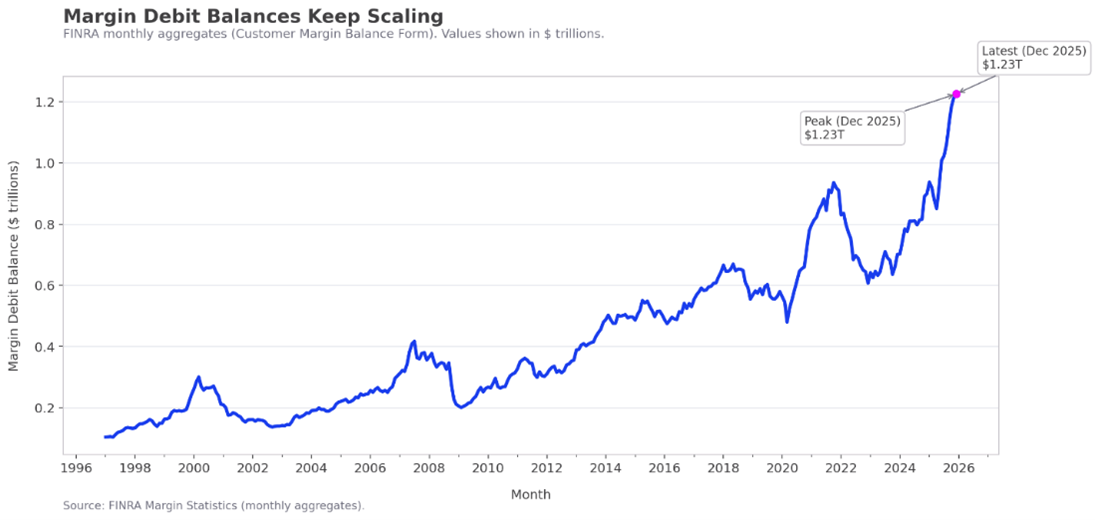 Figure 1. Aggregate margin debit balances reported by FINRA have increased materially over time.
FINRA discusses aggregate margin debit balances as part of its broader assessment of margin activity in today’s markets. The filing notes that margin debit balances are materially higher today than when the existing PDT requirements were adopted.4 FINRA presents this information to establish a baseline understanding of the scale of margin usage under current market conditions, rather than to characterize the growth itself as problematic.
By grounding the proposal in long-term margin statistics, FINRA frames the rule change as a response to structural changes in participation, account usage, and overall market scale. This sets the foundation for understanding why margin rules designed around earlier market conditions may warrant reassessment.
Margin Debit and Free Credit Balances
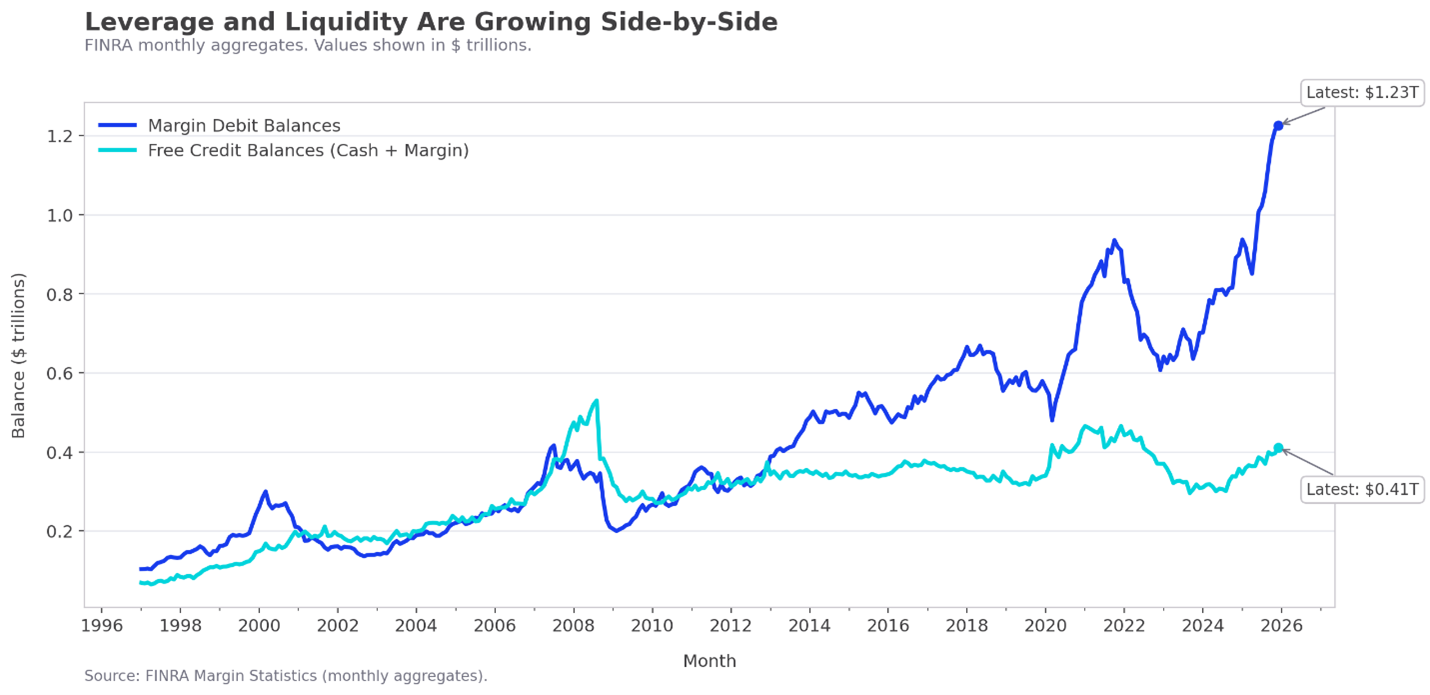 Figure 2. Both margin debit balances and free credit balances reported by FINRA have increased over time.
Building on the discussion of market scale, FINRA observes that both margin debit balances and free credit balances have increased over time.5 These measures reflect the growth of margin borrowing alongside higher customer balances held within margin accounts. The filing further shows that, in more recent periods, margin debit balances have grown at a faster pace than free credit balances, indicating that the use of margin borrowing has expanded more rapidly than the growth in unpledged customer funds.
FINRA explains that while free credit balances represent available liquidity, their presence does not, by itself, eliminate margin-related risk. Margin exposure, the filing emphasizes, is driven by how leverage is deployed, not solely by the amount of liquidity held in an account.6 This distinction helps explain why differences in growth rates between debit and credit balances are relevant when evaluating margin risk.
Taken together, these observations support FINRA’s focus on exposure-based standards rather than frameworks that rely exclusively on static balance levels or end-of-day measurements.
Historical Perspective on Margin Exposure
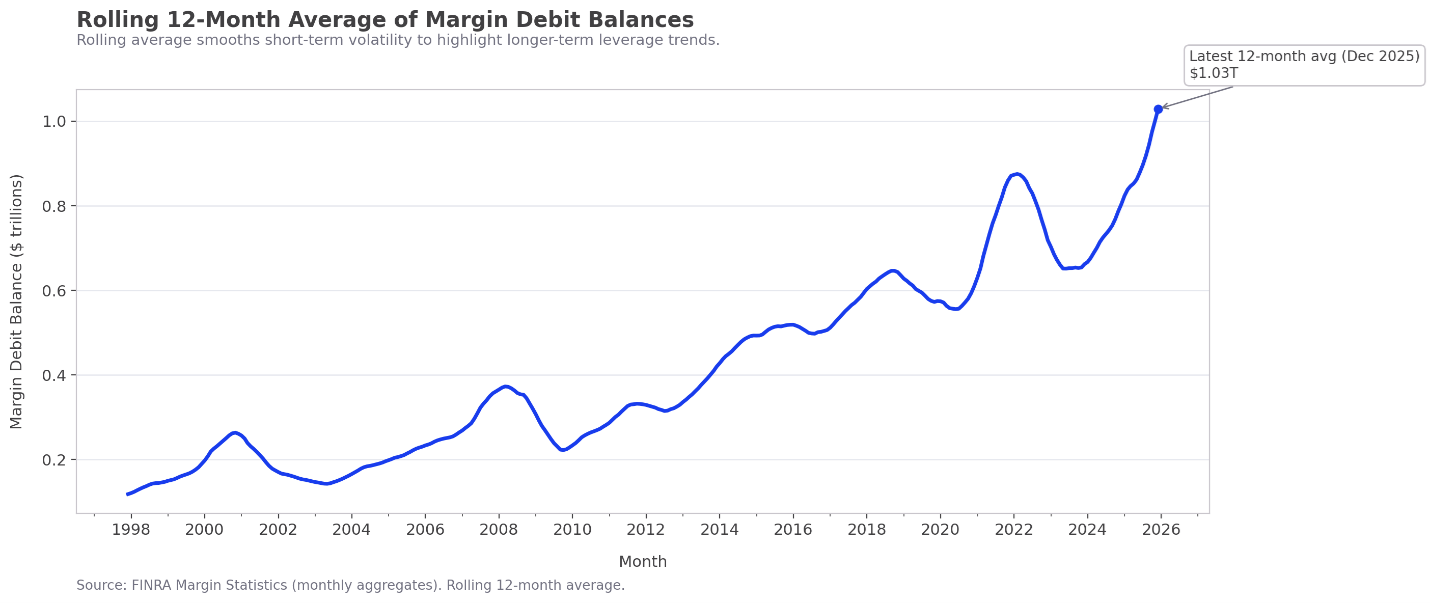 Figure 3. A rolling view of margin debit balances provides longer-term context for FINRA’s discussion of margin exposure.
FINRA relies on historical margin statistics to demonstrate that current margin conditions differ materially from those present when the PDT framework was originally established.4 The filing explains that aggregate customer margin debit balances today are significantly higher than they were at the time those requirements were adopted, reflecting structural changes in market participation and account usage.
Importantly, FINRA presents this historical comparison to show that periods of market stress have not resulted in a lasting return to prior baseline levels. While margin debit balances have declined during downturns, subsequent recoveries have tended to begin from progressively higher starting points.
This longer-term pattern provides a reference point for FINRA’s assessment that margin exposure has expanded across market cycles rather than fully reverting after periods of deleveraging. As a result, FINRA uses historical data to support the view that margin rules designed for earlier market conditions should be reassessed to ensure continued alignment with current risk dynamics.
Closing
FINRA frames its proposed amendments to Rule 4210 as a measured response to structural changes in market participation and margin usage. By anchoring this proposal in long-term margin statistics, FINRA positions the rule change as an effort to modernize margin oversight without expanding its scope or intent.
Sterling Trading Tech’s comment letter echoes this view, emphasizing that exposure-based intraday standards align margin regulation more closely with how risk develops in today’s markets. The full comment letter is available for download here.
Next: How margin risk actually develops during the trading day—and why timing matters.
Footnotes
We look forward to learning more about your trading needs.

Sterling's Position: Support, With Five Conditions
Blog Series: The 611 Question | Part ...

Sterling Trading Tech and Atlas Digital Markets Turn Order Data into Best Execution Evidence
Clients measure execution on their own complete order data inside the Sterling OMS 360 and ...

What the SEC Is Proposing, and the Cost Structure Rule 611 Built
Blog Series: The 611 Question | Part ...

Sterling Trading Tech Launches STRIDER™
Designed to support traders in today’s increasingly global and extended-hours trading ...
