Mar 26th, 2026



"This blog is part of Sterling Trading Tech’s series examining FINRA’s proposed intraday margin amendments to Rule 4210"
Introduction
In proposing amendments to Rule 4210, FINRA also reevaluates the role of trader classification, particularly the Pattern Day Trading framework, as a proxy for margin risk. Drawing on CAT data and margin statistics, FINRA concludes that exposure is not confined to a narrow population of PDT-designated accounts and that trader classification alone may not align with observed trading behavior.4
Sterling Trading Tech’s comment letter supports this assessment, emphasizing that exposure-based standards more accurately reflect how margin risk manifests across account types. (Read the full comment letter here)
PDT Accounts and Overall Market Activity
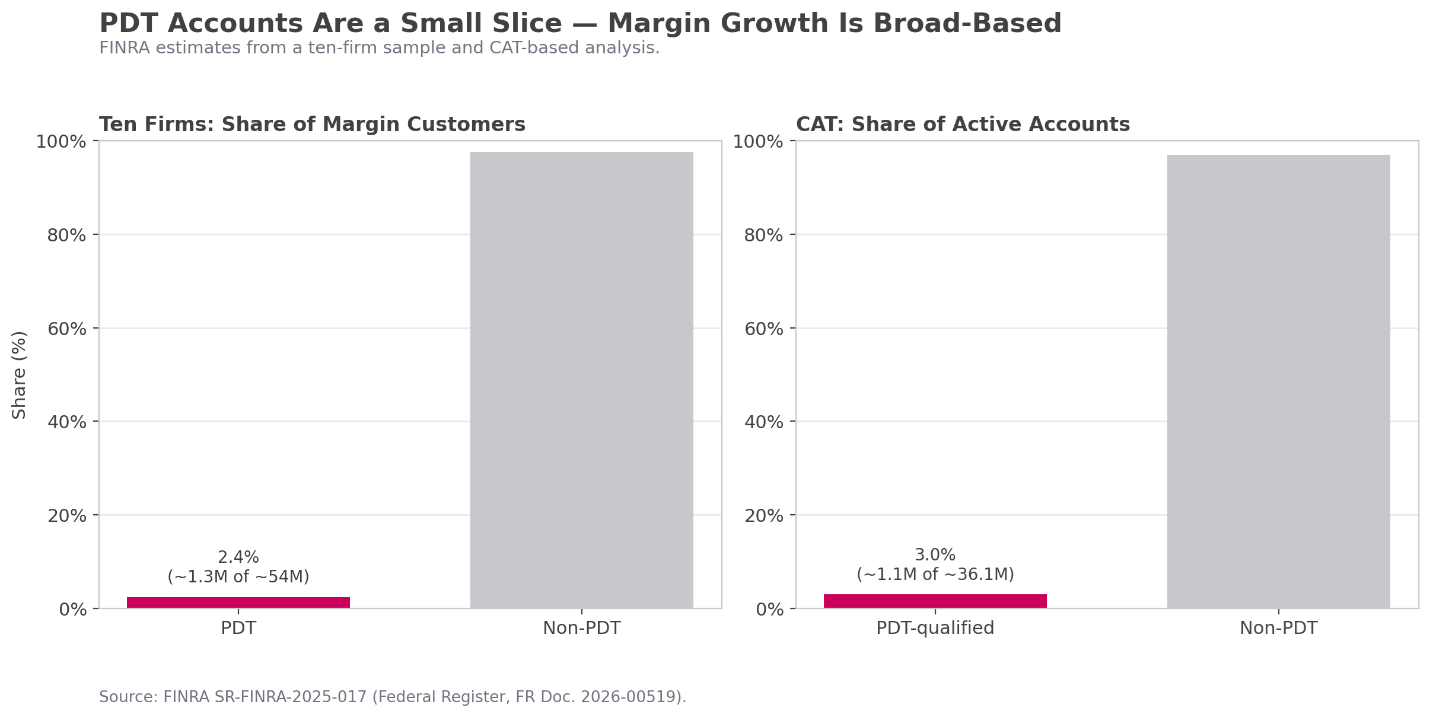 Figure 1. FINRA’s CAT analysis shows that PDT-designated accounts represent a small portion of total accounts.
FINRA’s CAT-based analysis shows that most customer accounts engage in little or no day trading and that PDT-designated accounts represent a relatively small subset of total active accounts.4 FINRA includes this analysis to illustrate that trader classification alone may not serve as a reliable proxy for margin risk across the broader market.
To support this assessment, FINRA explains that its analysis draws on CAT data from ten large broker-dealers, which it estimates collectively account for more than 85 percent of PDT-designated accounts.5 FINRA also describes the scope and limitations of the analysis, noting that it was designed to address a specific policy question rather than to serve as a comprehensive census of all margin accounts.
By presenting these findings and limitations transparently, FINRA reinforces its conclusion that margin exposure is not confined to a narrow population of PDT-designated accounts, supporting the proposed shift toward exposure-based intraday standards.6
Concentration of Day-Trading Activity
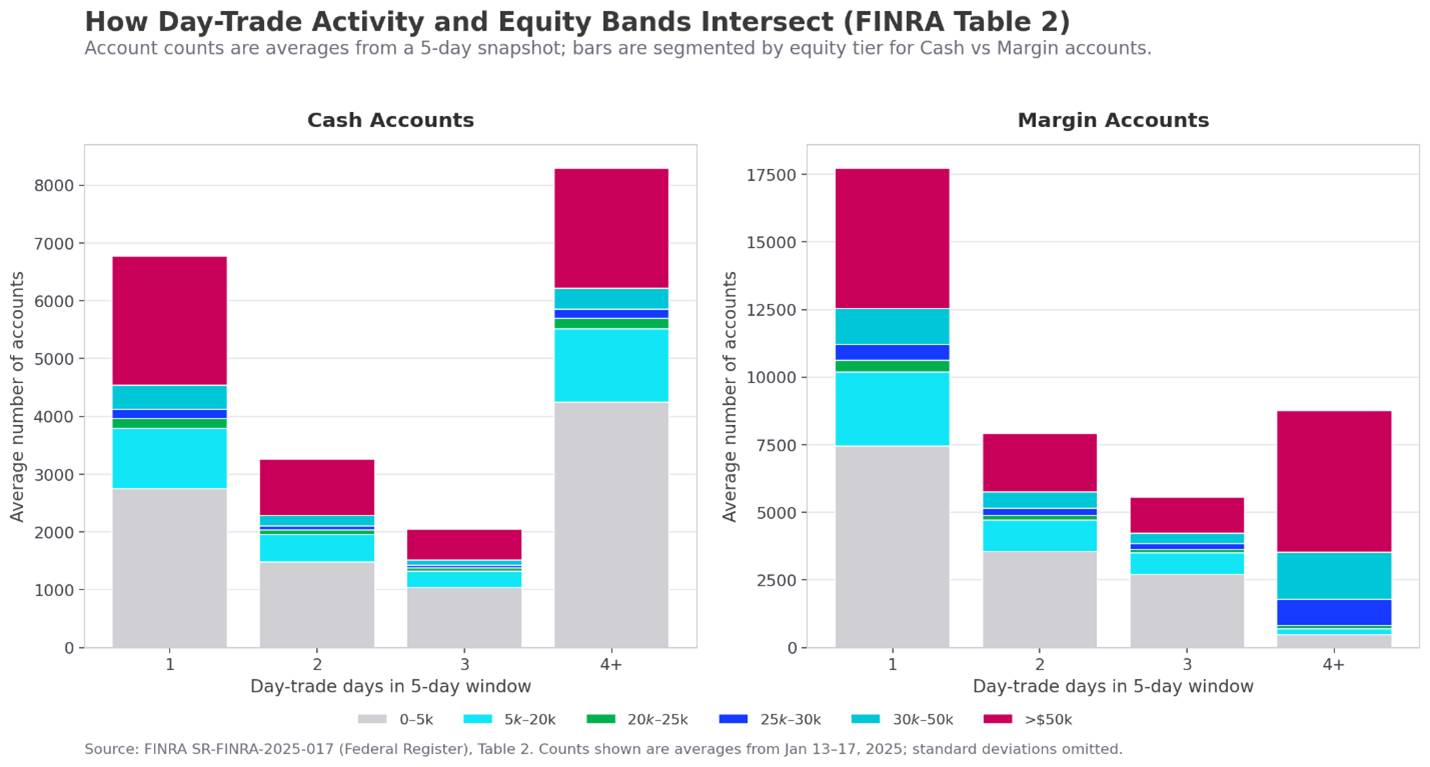 Figure 2. FINRA Table 2 reproduced using a five-day CAT snapshot shows day-trade frequency and equity distribution across cash and margin accounts.
FINRA’s analysis shows that day-trading activity is highly concentrated, with a relatively small subset of accounts accounting for a disproportionate share of day trades.4 While cash accounts also engage in frequent day trading, this activity is not directly relevant to margin risk because cash accounts are fully funded and do not permit borrowing.
The margin-account data is therefore where FINRA’s regulatory focus lies. Because margin accounts allow borrowing, repeated intraday trading can amplify exposure even when end-of-day equity appears sufficient. As shown in the accompanying chart, margin-based day trading is also concentrated, with higher-frequency activity increasingly associated with higher equity tiers—precisely the accounts capable of supporting leverage.
FINRA includes this analysis to help explain why trader classification alone is not a complete proxy for margin risk and why exposure-based standards better align with observed trading behavior.5
Leverage and Exposure Monitoring
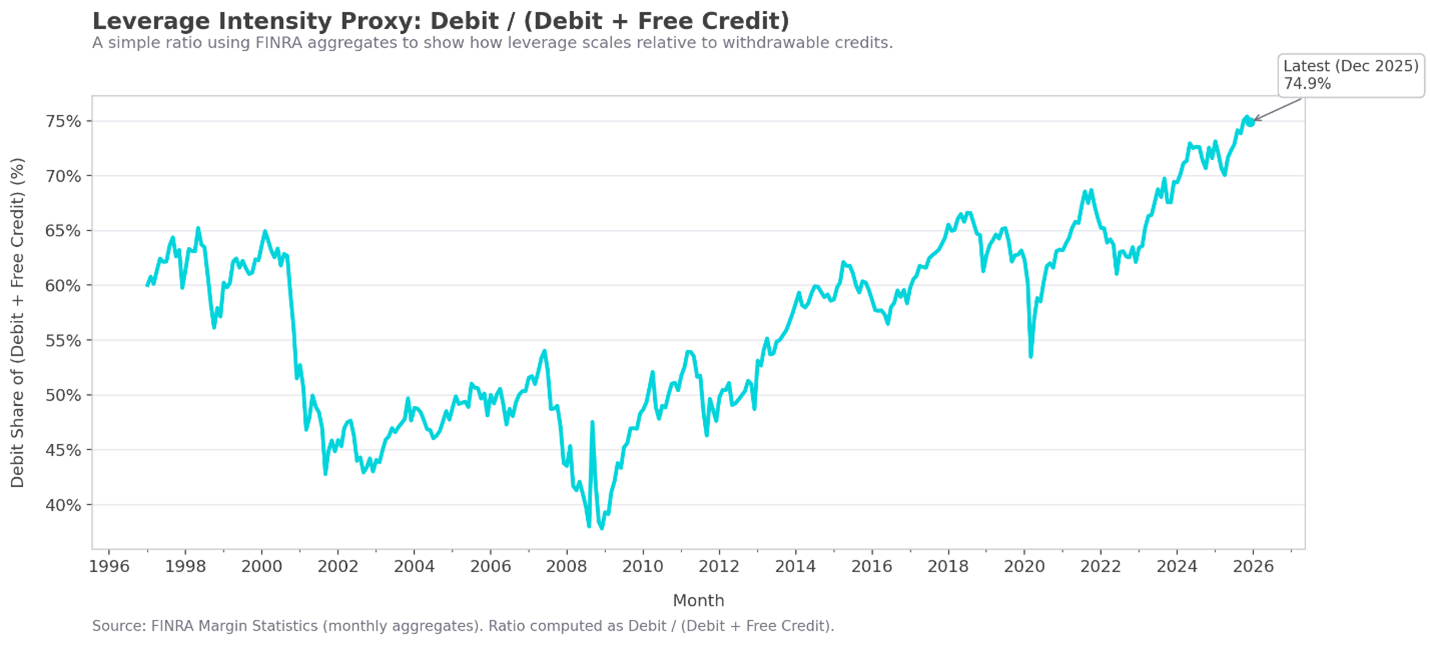 Figure 3. The relationship between margin debit balances and available credits provides additional perspective on leverage usage discussed by FINRA.
FINRA explains that the existence of free credit balances, even when substantial, does not by itself eliminate margin-related risk. Margin exposure is shaped by how leverage is deployed relative to available liquidity, not solely by absolute balance levels. 2
This dynamic can be more clearly illustrated by examining the ratio of margin debit balances to total customer balances (debit plus free credit). While derived from the same FINRA margin statistics, this alternative lens highlights how leverage evolves relative to withdrawable credits over time.
Viewed this way, periods in which borrowing represents a larger share of total balances become more apparent. This does not introduce a new risk metric, but reinforces FINRA’s explanation that liquidity alone is not a sufficient proxy for margin risk. FINRA’s emphasis on exposure-based standards reflects this interaction between leverage and liquidity throughout the trading day.3
A Measured Step Toward Modern Margin Oversight
FINRA frames the proposed amendments to Rule 4210 as a measured modernization of margin regulation—one intended to align requirements with current market structure, intraday risk formation, and more consistent regulatory application.1 By shifting from trader-based thresholds to exposure-based intraday standards, FINRA emphasizes transparency, consistency, and regulatory clarity as markets and participation continue to evolve.
Rather than expanding the scope or purpose of margin regulation, the proposal focuses on improving how and when margin risk is identified and managed. Sterling Trading Tech’s comment letter underscores this approach, highlighting the operational and risk-management benefits of aligning margin requirements with intraday exposure.
Footnotes
We look forward to learning more about your trading needs.

Sterling Risk & Margin Wins Best Margining Solution at Risk Asia Awards 2026
Award recognizes Sterling’s real-time margin management for brokerages and trading firms ...

When 611 Is Gone, Best Execution Is the Safeguard
Blog Series: The 611 Question | Part ...

Sterling's Position: Support, With Five Conditions
Blog Series: The 611 Question | Part ...

Sterling Trading Tech and Atlas Digital Markets Turn Order Data into Best Execution Evidence
Clients measure execution on their own complete order data inside the Sterling OMS 360 and ...
