Oct 15th, 2026



This post is the second in our series examining the SEC's proposed rescission of Rules 611 and 610(e) of Regulation NMS.
Earlier in this series:
Post 1 What the SEC Is Proposing, and the Cost Structure Rule 611 Built LINK HERE
Introduction
A comment letter is how a firm goes on the record. The first post in this series laid out the SEC's proposal to rescind Rules 611 and 610(e) and the cost case behind it. This post is about what we said in response. On August 10, 2026, in a comment letter (https://www.sec.gov/comments/S7-2026-20/s7202620-997559-3142729.pdf) signed by President & CEO Jen Nayar, we told the Commission that we support the proposal, and then spent most of the letter on the conditions that our support depends on.¹ This post walks through that position as a whole; the three posts after it take the conditions in turn.
Does Sterling Trading Tech Support the SEC's Proposal?
Start with the agreement, because it is genuine and specific. We support the proposal's direction and, in particular, its central objective: reducing the cost and complexity burden that Regulation NMS market-structure rules place on the industry: both the barriers that confront new entrants and the ongoing maintenance costs carried by firms already in the market.¹ As our letter puts it, the automation and interconnectivity of the U.S. equity markets have advanced substantially since 2005, and competition and market forces can now perform functions that older, static rules were designed to backstop.
This isn't an abstract endorsement. We build the plumbing: Sterling Trading Tech is a provider of order-management and trading-connectivity technology, and we operate a network connected to more than 100 destinations.¹ When a company that spends its days wiring firms into exchanges says the connectivity premise holds, that is a view from the field rather than from the sidelines, and it is the same view that lets us treat the proposal's cost case as credible rather than merely plausible.
That field-level perspective also shapes how carefully our letter treats the decline in registered broker-dealers. The convenient story would be that the rules drove firms out of business; we deliberately do not tell it. Our letter says only that the decline "has many causes" and is "consistent with" the cumulative regulatory and operational burden the proposal seeks to reduce.¹ The distinction is deliberate, and it matters. Broker-dealer counts and connectivity costs have moved in the same direction over the last decade, but moving together is not the same as one causing the other. The count has fallen for many reasons, and connectivity cost is at most one contributor among them, and one the Commission itself names. A correlation with a credible mechanism behind it is a good reason to act carefully; it is not a license to claim cause, and claiming more than the record supports would have made the letter weaker, not stronger.
What Are Sterling's Five Conditions for Supporting the Rescission?
And then comes the pivot that gives the letter its shape. Supporting the direction of a rule change is not the same as endorsing every way it might be carried out. Removing a rule is a larger act than it sounds, because a rule that has been in force for two decades is rarely doing just one thing: other systems, obligations, and expectations grow up around it and quietly lean on it. Our five conditions are, in essence, a map of what Rule 611 has been holding in place, paired with a request that each of those things be looked after as the rule comes down.
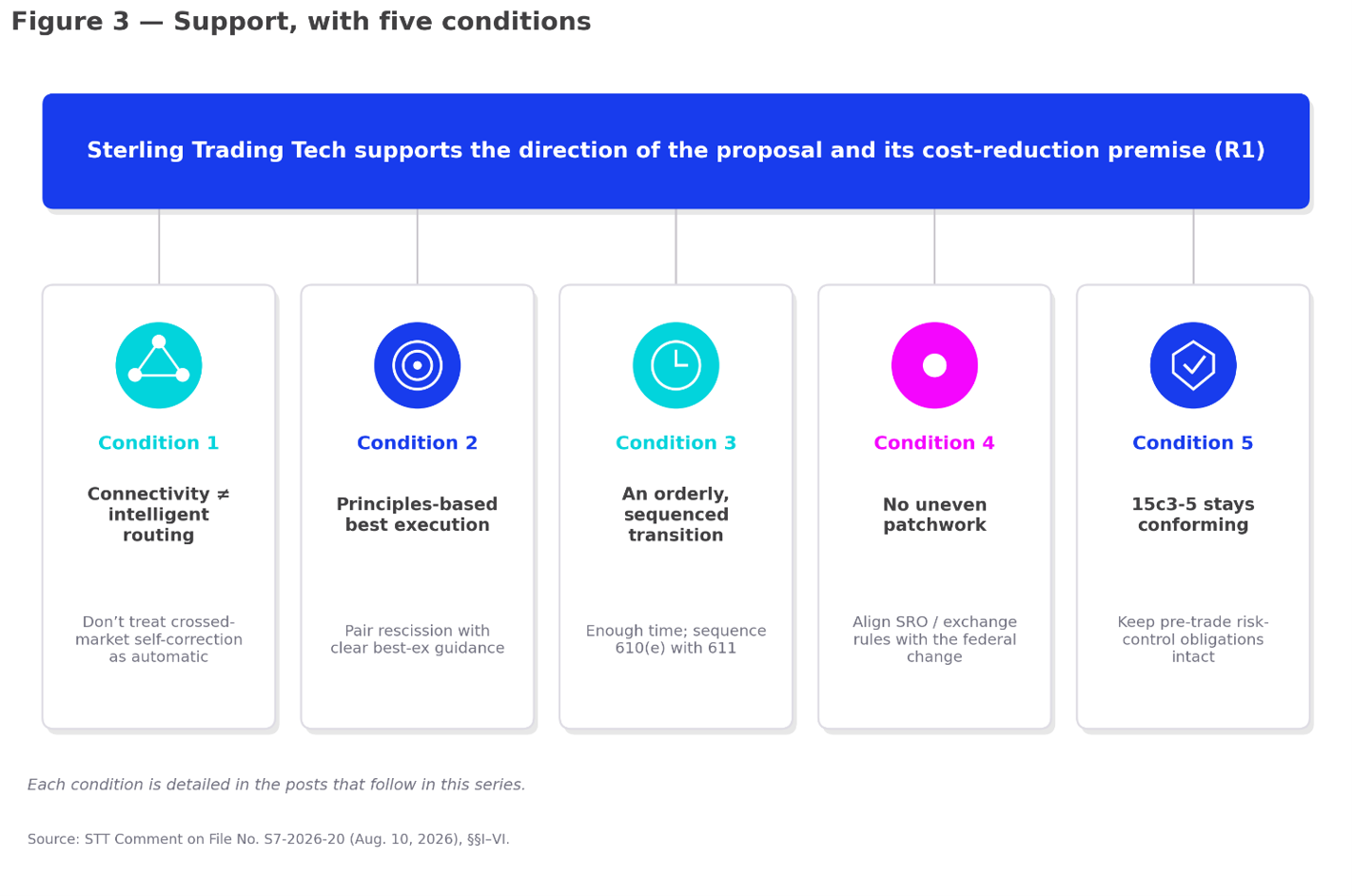
Figure 3 lays the position out at a glance. Here is what each condition is really asking for; we detail all five, in turn, across the three posts that follow.²
What Do the Five Conditions Have in Common?
Read together, the five conditions share one idea, and it is worth stating plainly because the rest of the series turns on it: removing a rule does not remove the function the rule performed; it relocates that function. Price protection that used to be guaranteed by an intermarket mandate now must be delivered through broker-dealers' order-handling systems and their duty of best execution. Consistency that used to be enforced at the federal level now depends on exchanges and SROs moving in step. Each condition points at one of those landing spots and asks the same question: is it ready to catch what Rule 611 is about to set down?
Closing
We offer all of this, in our letter's own words, "in the spirit of a smooth and well-sequenced transition," not as opposition dressed up as support, but as a builder's checklist for taking the scaffolding down without cracking the walls it stood against.³ The next three posts work through that list. We begin where the market actually touches the rule: the moment a single order meets a single quote.
Next: Why connectivity isn’t the same as intelligent routing, and why best execution becomes the safeguard.
Footnotes
1. Sterling Trading Tech, Comment on File No. S7-2026-20 (Aug. 10, 2026), Summary of Position and §I (support for the proposal's direction and cost-reduction premise; "connectivity to more than 100 destinations"; broker-dealer decline "has many causes" but "consistent with" the cumulative burden).
2. Id. §§II–VI (the five conditions; addressing Requests for Comment 5, 11, 12, 13, 17, 18, 19, 20, and 31).
3. Id., Conclusion.

We look forward to learning more about your trading needs.

Sterling's Position: Support, With Five Conditions
Blog Series: The 611 Question | Part ...

Sterling Trading Tech and Atlas Digital Markets Turn Order Data into Best Execution Evidence
Clients measure execution on their own complete order data inside the Sterling OMS 360 and ...

What the SEC Is Proposing, and the Cost Structure Rule 611 Built
Blog Series: The 611 Question | Part ...

Sterling Trading Tech Launches STRIDER™
Designed to support traders in today’s increasingly global and extended-hours trading ...
